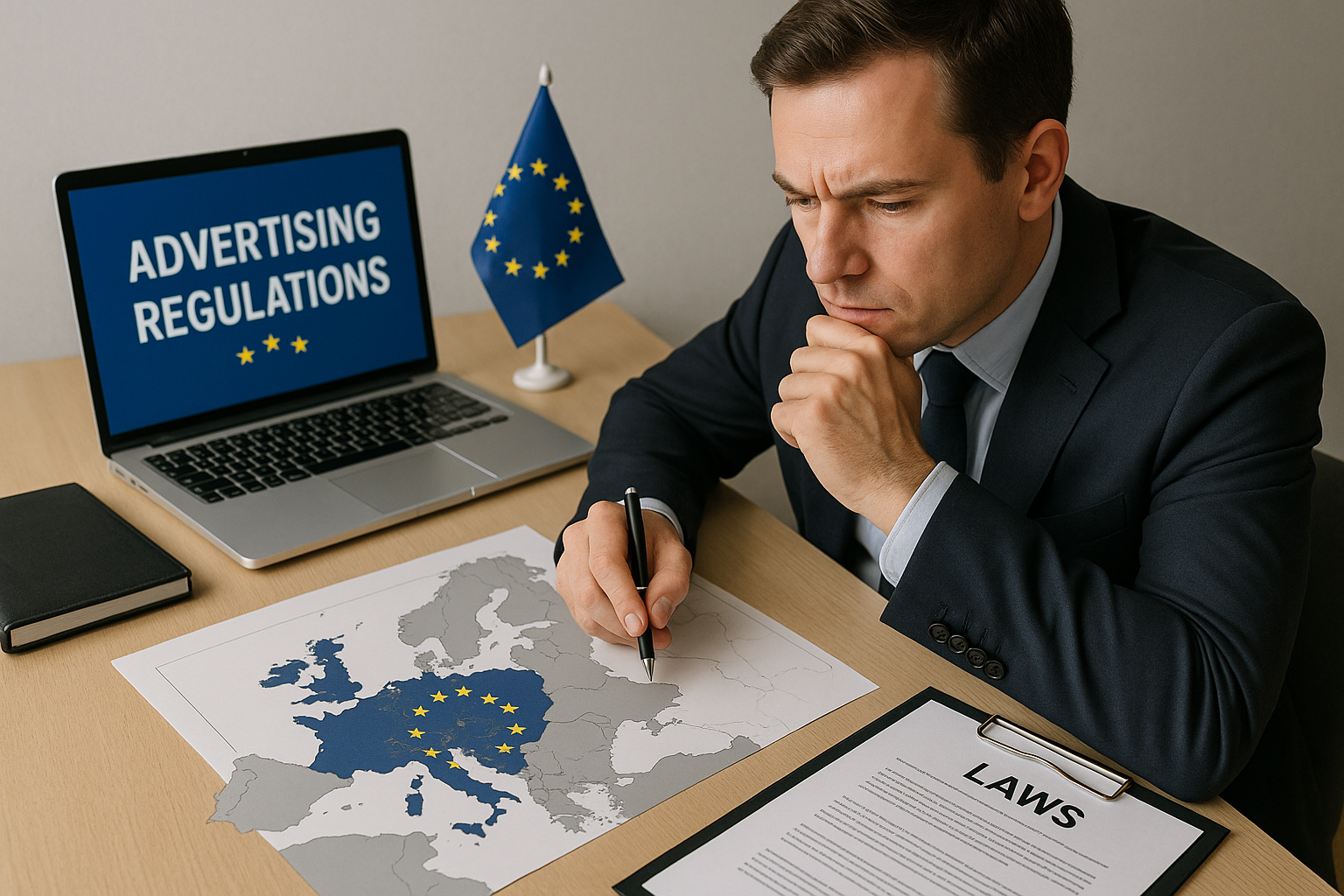
For businesses outside the European Union looking to expand into the EU market, knowing your product or service is only part of the equation. Just as crucial is understanding the context in which you’re operating. One of the most nuanced and impactful aspects of this is local advertising regulation. While the EU provides a general regulatory framework, advertising laws can differ significantly across member states. Missteps here can cost companies not only financially but also in brand reputation.
The Crucial Role of Local Market Knowledge
Local market knowledge extends beyond consumer preferences—it includes regulatory norms, cultural expectations, and legal constraints. Advertising is one area where cultural sensitivity and regulatory precision intersect. What is acceptable in one country may be illegal or culturally offensive in another. For example, claims about health benefits, environmental friendliness, or pricing must be substantiated and communicated in line with local and EU-wide rules. This requires not just translation, but genuine localisation—understanding the context in which your message will be received.
A Patchwork of EU Advertising Laws
The European Union has enacted several directives and regulations that set the baseline for advertising, such as the Unfair Commercial Practices Directive and the Audiovisual Media Services Directive. However, implementation and enforcement remain within the purview of national authorities. This means that even if your campaign meets EU-level compliance, you might still fall foul of local interpretations or additional national laws. For instance, alcohol advertising is strictly limited in France under the Loi Evin, while Sweden bans advertising aimed at children under 12. This fragmented landscape makes local expertise indispensable.
Translating Compliance into Competitive Advantage
Understanding and adhering to advertising regulations isn’t merely a legal hurdle—it’s a strategic opportunity. A well-informed campaign that respects local norms can build trust and distinguish your brand as professional and credible. This is particularly true in sectors like healthcare, food, and sustainability, where consumer trust is paramount. Companies that invest in legal review and market-specific adaptation early often avoid costly revisions and reputational damage later.
Practical Steps for Non-EU Businesses
To successfully navigate EU advertising regulations, start with a clear compliance strategy. Partner with local legal counsel or marketing agencies that understand both the national and EU-level requirements. Conduct a regulatory audit of your existing materials before entering a new market. Localise—not just translate—your content to align with cultural expectations. And finally, maintain flexibility: what works in Germany may need revision for Spain or Italy.
Common Pitfalls to Avoid
Many non-EU companies underestimate the complexity of EU advertising compliance. They assume that a ‘one-size-fits-all’ approach will suffice, or that English-language content automatically sidesteps local requirements. Others fail to substantiate marketing claims, particularly around sustainability, which can lead to accusations of greenwashing. Still more are tripped up by data protection rules like the GDPR when using targeted ads. Each of these mistakes is avoidable with the right preparation and local insight.
Conclusion: From Compliance to Confidence
Success in the EU market depends not just on having a good product, but on navigating the regulatory and cultural terrain skillfully. Advertising regulations are a prime example of where local market knowledge can make or break your expansion. By investing in understanding and respecting local rules, you don’t just avoid penalties—you build trust, gain competitive advantage, and set your business up for sustainable success.