Expanding into the European Union offers substantial opportunities for non-EU companies. With its unified market, sophisticated infrastructure, and affluent consumer base, the EU is a top destination for international expansion. However, entering this complex market without a comprehensive risk management strategy can result in regulatory setbacks, financial losses, and reputational damage. Understanding the EU’s regulatory terrain and the essential role of tailored risk mitigation measures is not optional — it is strategic survival.
Understanding the Risk Landscape in the EU
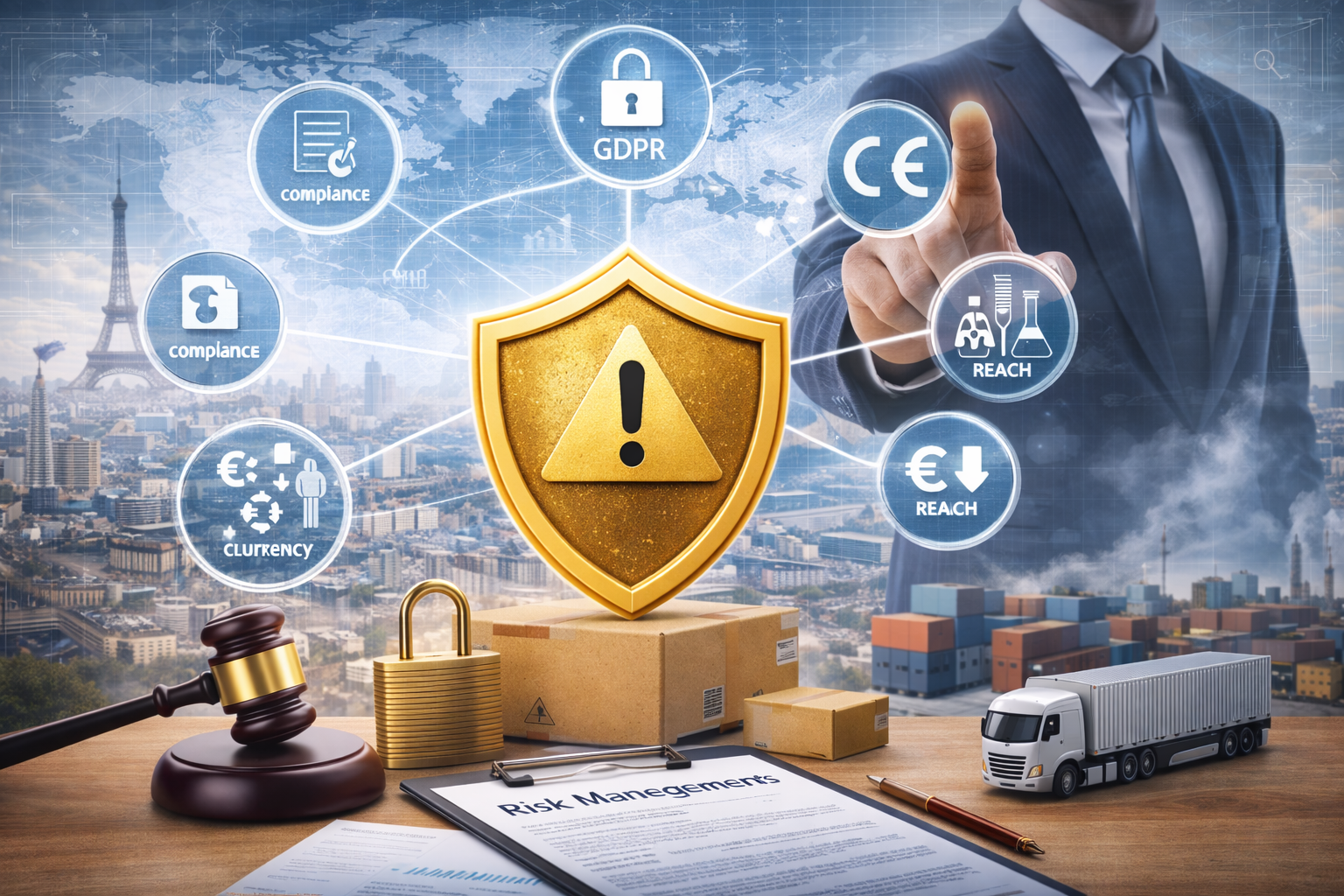
The EU’s regulatory framework is among the most stringent in the world, covering everything from data privacy and product safety to environmental sustainability and labor rights. For companies unfamiliar with these rules, the learning curve is steep. The General Data Protection Regulation (GDPR), for instance, enforces strict data handling rules, with penalties reaching up to €20 million or 4% of annual global turnover — whichever is higher. Likewise, CE marking requirements and REACH regulations impose legal responsibilities that, if neglected, can block market access entirely.
Beyond compliance, companies must consider macroeconomic risks, such as currency fluctuations and inflation, and geopolitical tensions, such as evolving trade policies or sanctions. Operational risks tied to supply chain disruptions, labor shortages, and cyber threats are also prevalent.
Tailoring Risk Management to Your Business Model
Risk management in the EU should never be a one-size-fits-all exercise. A tech company managing user data will face radically different risks from a manufacturer importing raw materials. Identifying exposure begins with a thorough risk assessment, ideally conducted by local experts who understand both EU law and sector-specific dynamics.
Next comes designing internal controls that are both legally sound and operationally realistic. This might include establishing a Data Protection Officer (DPO), creating escalation protocols for regulatory inspections, and implementing real-time supply chain monitoring tools. Larger firms often establish a local risk committee to oversee EU operations and ensure continuity planning is aligned with EU regulatory updates.
Tools and Resources That Help Navigate the Complexity
Fortunately, non-EU companies are not alone in this endeavor. Many choose to work with EU-based compliance consultants, risk auditors, or international law firms. Industry associations and EU-funded initiatives such as the Enterprise Europe Network also provide guidance. For digital monitoring, platforms that track regulatory changes in real time can be a game-changer, especially for firms with multiple product lines or cross-border activities.
An increasingly popular approach is the adoption of integrated risk management (IRM) platforms that centralize compliance, audit, and reporting data. These systems help companies detect risks early, align their EU governance with their global risk strategy, and maintain evidence of compliance for audits or due diligence.
Lessons from the Field: Common Pitfalls and How to Avoid Them
A frequent misstep among non-EU entrants is underestimating the pace and complexity of EU regulatory change. For example, companies that delayed aligning with the EU’s Corporate Sustainability Reporting Directive (CSRD) now face rushed remediation projects and potential investor scrutiny. Another common issue is treating compliance as an IT task rather than a company-wide responsibility, leading to siloed efforts and inconsistent practices.
Smart companies embed risk management into every stage of their EU market strategy, from product design and packaging to logistics and local hiring. They also create robust feedback loops between their EU teams and global leadership to adapt quickly when risks evolve.
Strategic Benefits of Getting Risk Management Right
Managing risk well is not just about avoiding penalties — it’s about earning trust and building a resilient, adaptable EU operation. Companies that demonstrate strong governance gain credibility with customers, partners, and regulators. They are also better positioned to seize opportunities in the market, such as bidding for public contracts or scaling faster across EU member states.
Ultimately, risk management becomes a competitive advantage — one that underlines operational maturity and sends a clear message: this company is here to stay.
Conclusion: Build Your Strategy on Solid Ground
For non-EU businesses, venturing into the European Union without a risk management strategy is like sailing into a storm without a compass. The risks are real — but with the right approach, they are navigable. By investing early in tailored, proactive risk governance, companies lay the foundation for long-term growth, market resilience, and strategic success within one of the most sophisticated business environments in the world.