Understanding the Compliance Landscape
Expanding into the European Union brings unparalleled opportunities, but also a regulatory environment that demands precision, transparency, and accountability. For non-EU companies, one of the most critical aspects of this regulatory landscape is compliance. Navigating the web of rules around data protection, consumer rights, tax reporting, and particularly Anti-Money Laundering (AML) obligations is essential—not only to remain legally sound but to build long-term trust with EU stakeholders.
Compliance within the EU is not a box-ticking exercise; it’s a business-critical function. Decision-makers at companies entering the EU market should understand that EU regulators are proactive, well-resourced, and increasingly collaborative across borders. Failing to meet compliance obligations can result in penalties, loss of market access, and reputational damage that takes years to repair.
Why AML Matters More Than Ever
Anti-Money Laundering regulations have become one of the EU’s top compliance priorities. Under the EU’s AML Directives—especially the Sixth Anti-Money Laundering Directive (6AMLD)—companies face tougher requirements and broader liability. Non-EU businesses offering services or products within the EU must comply with these standards if they fall within the scope of EU AML laws.
The 6AMLD broadens the definition of money laundering and holds companies criminally liable for enabling such acts, even indirectly. It also introduces harmonized sanctions across the EU and expands the list of predicate offences to include cybercrime and environmental crimes. For foreign companies, this means internal control systems must be watertight from day one of market entry.
Key AML Compliance Requirements for Non-EU Businesses
AML obligations for non-EU companies vary depending on their operational model. For example, if you open a branch in an EU Member State or offer financial services such as payment processing or digital wallets, you will likely need to:
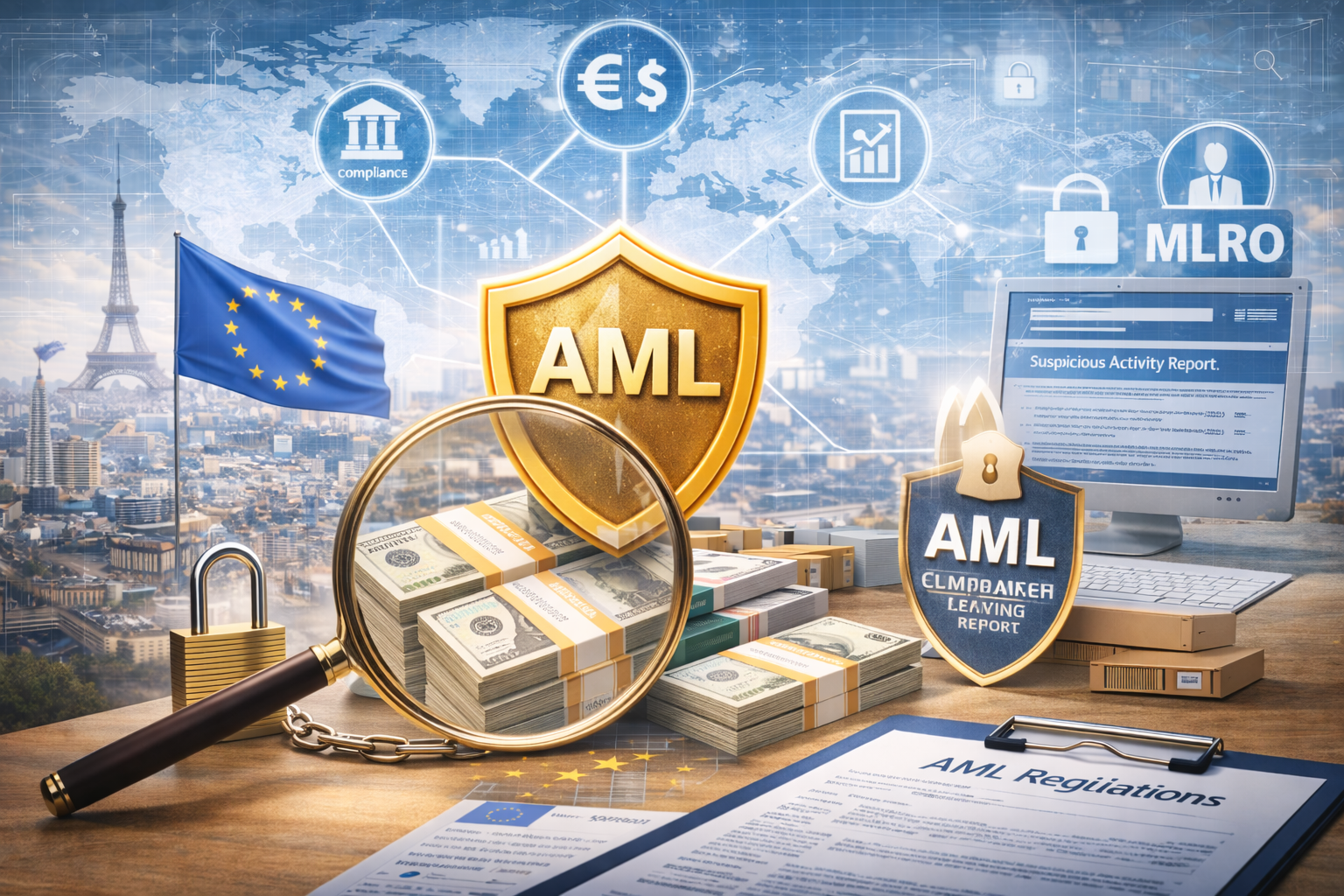
– Appoint a Money Laundering Reporting Officer (MLRO) based in the EU.
– Implement a risk-based Know Your Customer (KYC) framework.
– Perform Enhanced Due Diligence (EDD) on high-risk customers.
– Set up secure transaction monitoring systems.
– File Suspicious Transaction Reports (STRs) with the relevant Financial Intelligence Unit (FIU).
Even tech companies, online marketplaces, and crypto firms are now under growing scrutiny, especially if they facilitate payments, transfers, or digital assets.
Strategic Steps for AML Compliance
Non-EU businesses aiming for sustainable EU market entry should approach AML compliance strategically. Begin with a compliance gap assessment tailored to EU AML standards. Invest in local legal and compliance advisors to interpret national differences—since implementation of EU directives can vary across Member States.
Digital tools can also help. Many firms use RegTech (regulatory technology) platforms to automate KYC and transaction monitoring, allowing compliance teams to work more efficiently and spot anomalies faster. If your company processes large volumes of transactions, automated screening tools can significantly reduce your exposure to AML risk.
Common Pitfalls and How to Avoid Them
A common mistake among non-EU businesses is underestimating the extraterritorial reach of EU AML law. If your services are accessible to EU citizens—even if your business is located outside the EU—you may still fall within the scope.
Another misstep is treating compliance as a one-off project. AML compliance is ongoing. Changes in transaction volume, customer profile, or services offered may trigger new obligations. Regular internal audits and updated training for staff are key to staying ahead of regulatory shifts.
Conclusion: Compliance as a Gateway to Market Confidence
Committing to AML compliance is more than regulatory necessity—it is a strategic investment. It signals to EU regulators, partners, and customers that your business takes financial integrity seriously. For non-EU companies, building this trust is crucial to long-term success in the European market.
Before entering the EU, ask yourself: Are your compliance processes ready for scrutiny? If the answer is no, now is the time to act. Establishing robust AML procedures before market entry can save time, cost, and risk down the line. It’s not just about doing business—it’s about doing it right.